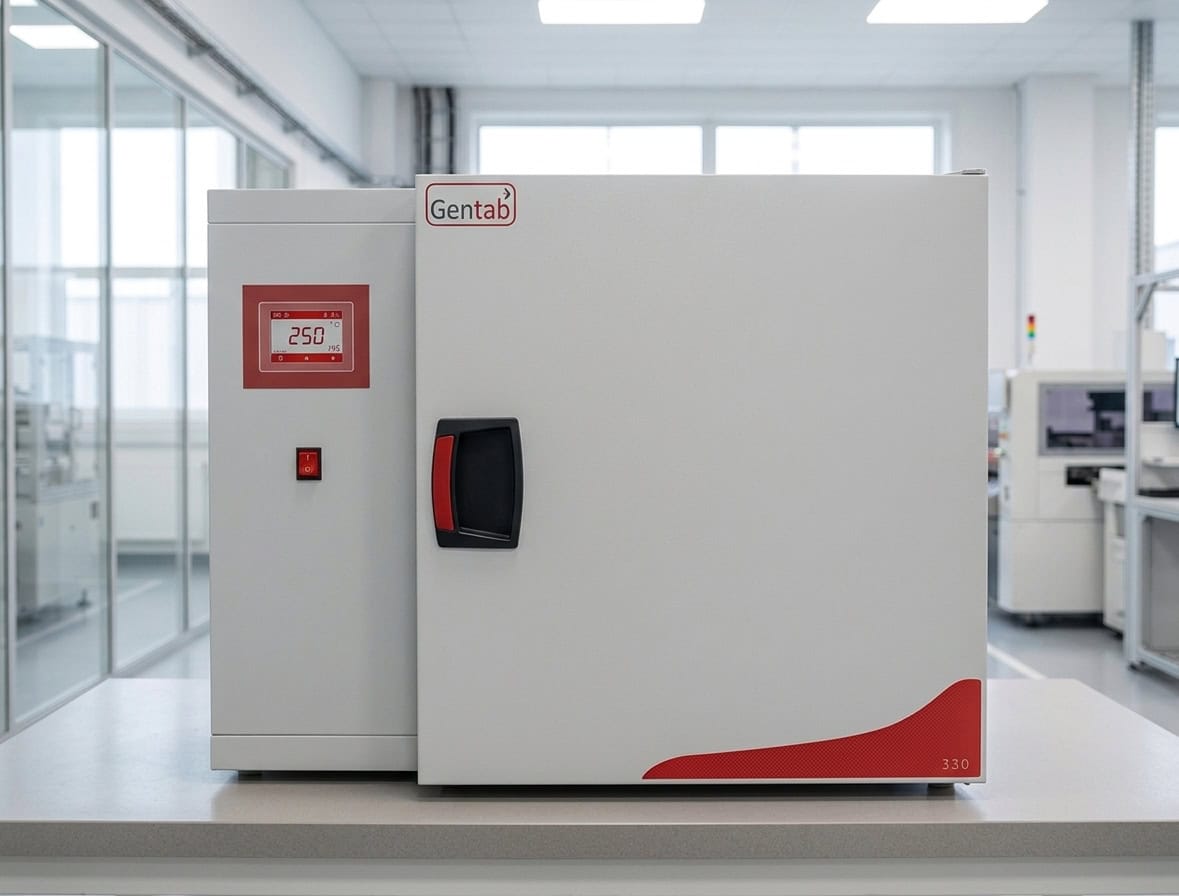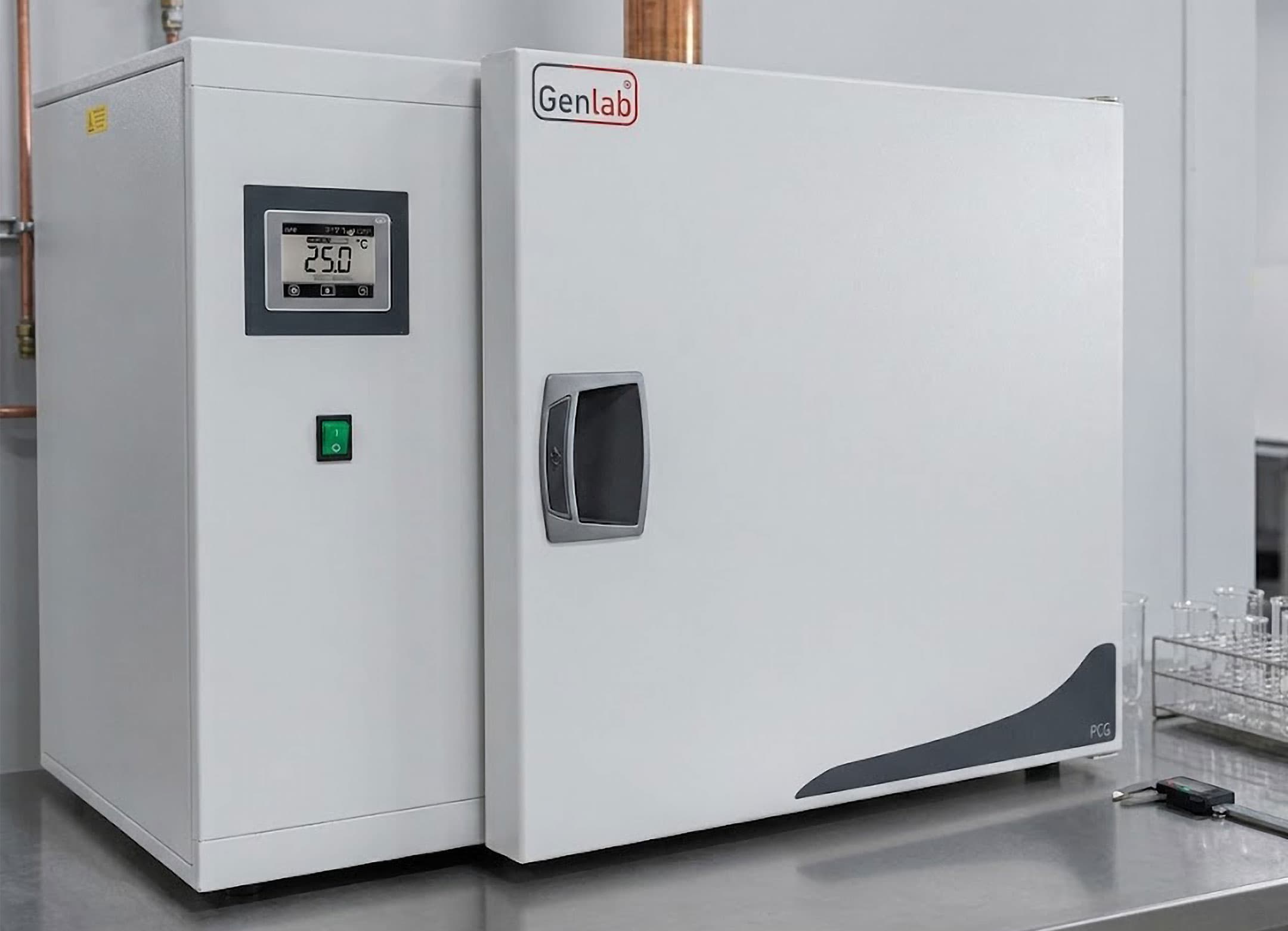
Laboratory ovens are used across a wide range of applications, from routine drying and conditioning to processes involving heat-sensitive materials. Because of this, choosing between laboratory ovens comes down to what the equipment needs to do. For compact ovens, they tend to work well for small batches in a busy laboratory, while large capacity ovens could be a better fit for production volumes or oversized parts. Some materials also need reduced-pressure drying, which takes the decision beyond a standard heated workspace.
Temperature range, usable volume, airflow, sample sensitivity and record-keeping needs all affect whether an oven will support the intended work.
Different laboratory oven types
Laboratory ovens provide controlled heating for work such as drying, curing, conditioning, ageing and quality testing. The right format depends on the heating objective, the load and how consistently the conditions need to be maintained.
| Oven type | Usually selected for | Main consideration |
|---|---|---|
| Drying oven | Controlled moisture removal and routine heating | Airflow, loading and temperature control need to suit the material |
| Large capacity oven | Larger items, batch work and higher-volume workloads | Usable volume, access and load arrangement become more significant |
| Benchtop oven | Smaller loads and space-constrained laboratories | Compact footprint needs to be balanced against working volume |
| Vacuum oven | Drying or heating under reduced pressure | The material and method need to justify a vacuum-based approach |
These options aren’t interchangeable. A drying oven may be the practical choice for routine moisture removal, but it won’t necessarily suit a load that needs reduced pressure. Equally, a benchtop unit may save space but become restrictive if batch sizes increase or the product needs more room for airflow.
Start with the heating task
Before comparing models, define what the heating stage needs to achieve. Whether the application involves drying, curing or ageing, the required temperature, airflow and dwell time will influence the type of oven needed.
It also helps to look ahead because an oven that is selected for today’s small sample batches might not be the best long-term option if the workload is likely to move towards larger assemblies, higher throughput or more formal quality control.
Drying ovens for controlled moisture removal
A laboratory drying oven is generally used where materials need controlled heating to remove moisture. This can include sample preparation, drying components after washing, conditioning materials before testing or supporting routine laboratory work.
The material being dried shapes the specification. Lightweight samples may respond quickly, while dense or moisture-retaining items can need longer to warm through and release moisture. Further to this, the load arrangement also matters too. If trays are tightly packed or samples block the airflow, some areas may dry more slowly than others.
A drying oven is often a sound starting point where the work involves:
- moisture removal from samples, components or materials
- controlled heating before weighing, inspection or testing
- routine drying of glassware, tools or laboratory equipment
- conditioning before a later stage of laboratory or quality work
Drying ovens can also support selected curing or heating tasks, but the required temperature, airflow and exposure time need to match the material manufacturer’s guidance or the relevant internal method. If you’re unsure as to what laboratory drying oven to choose from, ETS can guide you once we discuss your requirements.
When a large capacity oven is the better fit
A compact oven can be efficient for small, repeatable loads. However, it becomes less practical when the item is physically large, several batches need to run at once or the loading arrangement restricts heat circulation.
Large capacity laboratory ovens are intended for larger products, batch work and higher-volume heating activities. The additional space isn’t only about fitting more inside though, but can provide the clearance needed for shelves, fixtures and airflow around the load.
This becomes particularly relevant where an item has a high thermal mass. A large metal assembly, for instance, will take longer to reach a stable temperature than a small sample. Adding more product to the workspace can also affect heat-up time and temperature recovery between door openings.
Before selecting a larger unit, establish:
- the dimensions and weight of the largest load
- the typical batch quantity
- how the product will be loaded and removed
- whether shelves, trays or fixtures are needed
- the clearance required around the load
- available floor space and access for installation
A larger oven can improve throughput, but only if the operating method allows the full workspace to be used without compromising heating consistency.
When benchtop ovens make sense
Benchtop ovens provide controlled heating in a compact format. They can be a practical choice for laboratories, research areas and quality teams that work with smaller samples or have limited floor space.
The advantage is straightforward: the oven can be placed close to the point of use without requiring a large dedicated footprint which can simplify routine work where operators need frequent access to small loads.
However, a benchtop format needs the internal workspace to accommodate the product with the right amount of room for airflow, and the bench itself needs to support the installation requirements.
A benchtop oven is often worth considering where:
- samples or components are small enough for a compact workspace
- the workload is low-volume or carried out in smaller batches
- available laboratory space is limited
- the oven needs to be located near the test or preparation area
If demand is likely to increase, it may be better to allow for future batch size rather than choosing solely around the smallest current requirement.
When might a vacuum oven be needed?
A vacuum oven operates under reduced pressure. This can be relevant where the material is heat-sensitive, where moisture needs to be removed at lower temperatures or where the method specifically calls for drying under vacuum.
Reduced pressure changes the conditions around the product and can support moisture removal without relying on the same temperatures used in a standard drying oven. That doesn’t mean a vacuum oven is automatically the better option for every drying task. It is a more specialist route that needs to be justified by the material, required outcome and test or production method.
A vacuum oven may be relevant where:
- the material could be affected by higher-temperature drying
- a method requires reduced-pressure conditions
- the aim is to remove moisture or solvents from a sensitive product
- conventional air circulation could disturb the material or affect the outcome
Vacuum oven selection also involves factors beyond workspace size and temperature range. The vacuum level, control method, loading arrangement and any connection or monitoring needs all need to suit the intended work.
What’s the difference between natural and forced convection?
Convection describes how heated air moves through the oven. It affects how heat reaches the load and can influence the consistency of the heating or drying activity.
Natural convection relies on the movement of warm air without fan assistance. This can be useful where the load is lightweight, delicate or likely to be disturbed by a stronger air movement.
Forced convection uses a fan to circulate air through the workspace. It can help distribute heat around larger loads or fuller shelf arrangements, but higher airflow isn’t automatically right for every material.
Loading still influences the result, regardless of the convection type. Leave enough clearance around trays and components for air to circulate, rather than packing shelves tightly. The oven setpoint also indicates the control temperature, not necessarily the temperature at the centre of every item. Dense materials, larger batches and closely arranged loads need adequate time to warm through and stabilise before the drying or conditioning period is assessed.
Laboratory ovens or environmental chambers?
A laboratory oven is normally the right route for controlled dry heating, drying, curing or conditioning. It isn’t designed to replace an environmental chamber where the work involves low temperatures, humidity control, condensation, thermal cycling or wider climatic simulation.
For example, a material that needs heating before inspection may be suited to an oven. A product that needs exposure to controlled temperature and relative humidity conditions will usually need an environmental test chamber instead.
Questions to ask before buying
Once you have established the application and the type of oven that suits it, a few practical considerations can help narrow down the specification:
- Heating objective – Is the aim drying, curing, conditioning, ageing or another controlled heating activity?
- Temperature range – What temperatures are needed in normal use, and is a higher operating range genuinely required?
- Load size and throughput – What are the dimensions, weight and quantity of the items being processed?
- Airflow and uniformity – Does the material need natural airflow, forced circulation or a particular loading arrangement?
- Available space – Is a benchtop format practical, or does the workload justify a larger floor-standing unit?
- Controls and records – Does the work need programmed heating stages, recorded data or traceable operating information?
- Calibration and support – Does the quality system require evidence of temperature performance at defined points?
Control and data logging systems can support applications that need improved monitoring, programmed control or retained temperature records. The required level of recording will depend on the task and any applicable quality procedures.
Calibration may also be relevant where temperature performance affects product quality, repeatability or audit evidence. Calibration services can be discussed around the operating temperatures and points that matter to the application. Calibration supports confidence in the equipment, but it doesn’t by itself confirm that the wider heating method is suitable.
Discuss your requirements
For applications where temperature needs to be monitored or documented, it’s worth considering the level of control and data logging required. The right level of functionality will depend on the process and any applicable quality procedures.
Calibration can also form part of the equipment specification where temperature performance affects product quality, repeatability or audit requirements. The relevant calibration points should reflect the temperatures at which the oven will actually operate. While calibration provides evidence of temperature performance, it does not by itself confirm that the wider heating method is suitable for the application.
Explore ETS laboratory ovens or contact ETS to discuss the most relevant route for your application.
Frequently Asked Questions
- What is the difference between a drying oven and a laboratory oven?
A drying oven is a type of laboratory oven used for controlled moisture removal. The wider laboratory oven category can also include equipment for heating, curing, conditioning, ageing and quality-related work.
- When should I choose a benchtop oven?
A benchtop oven can be a good choice where space is limited and the samples or components fit comfortably within a compact workspace. Check that the load can be arranged with adequate airflow clearance.
- When is a large capacity laboratory oven needed?
A large capacity oven is more likely to be needed for bigger products, higher batch volumes or workloads that require more shelving, fixtures or access space.
- What is a vacuum oven used for?
A vacuum oven is used for heating or drying under reduced pressure. It may be relevant for heat-sensitive materials or methods that require vacuum conditions rather than conventional heated-air drying.
- Do laboratory ovens need calibration?
Calibration can be useful where temperature performance affects quality, repeatability or audit requirements. The frequency and scope need to reflect the application, risk level and relevant quality system.