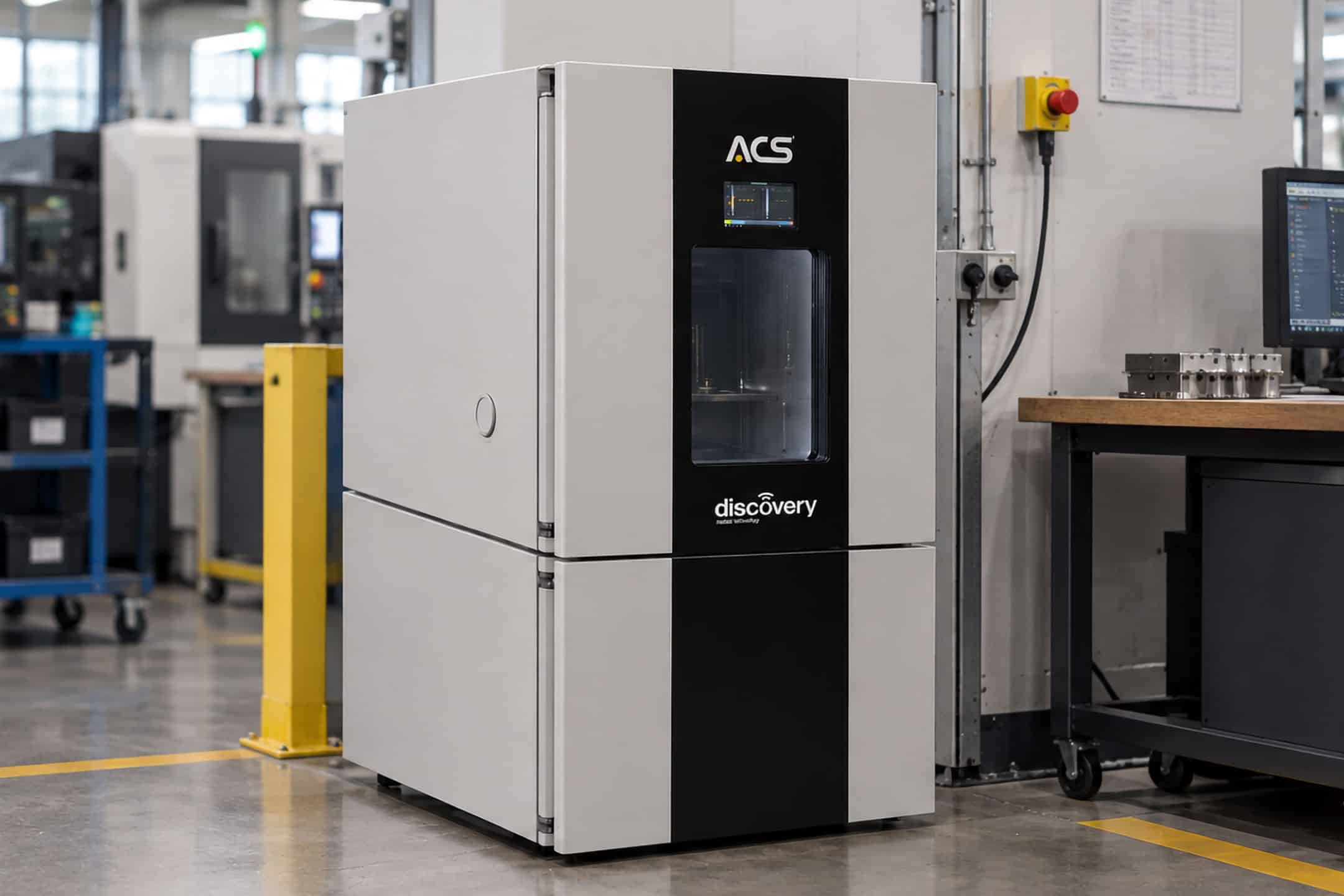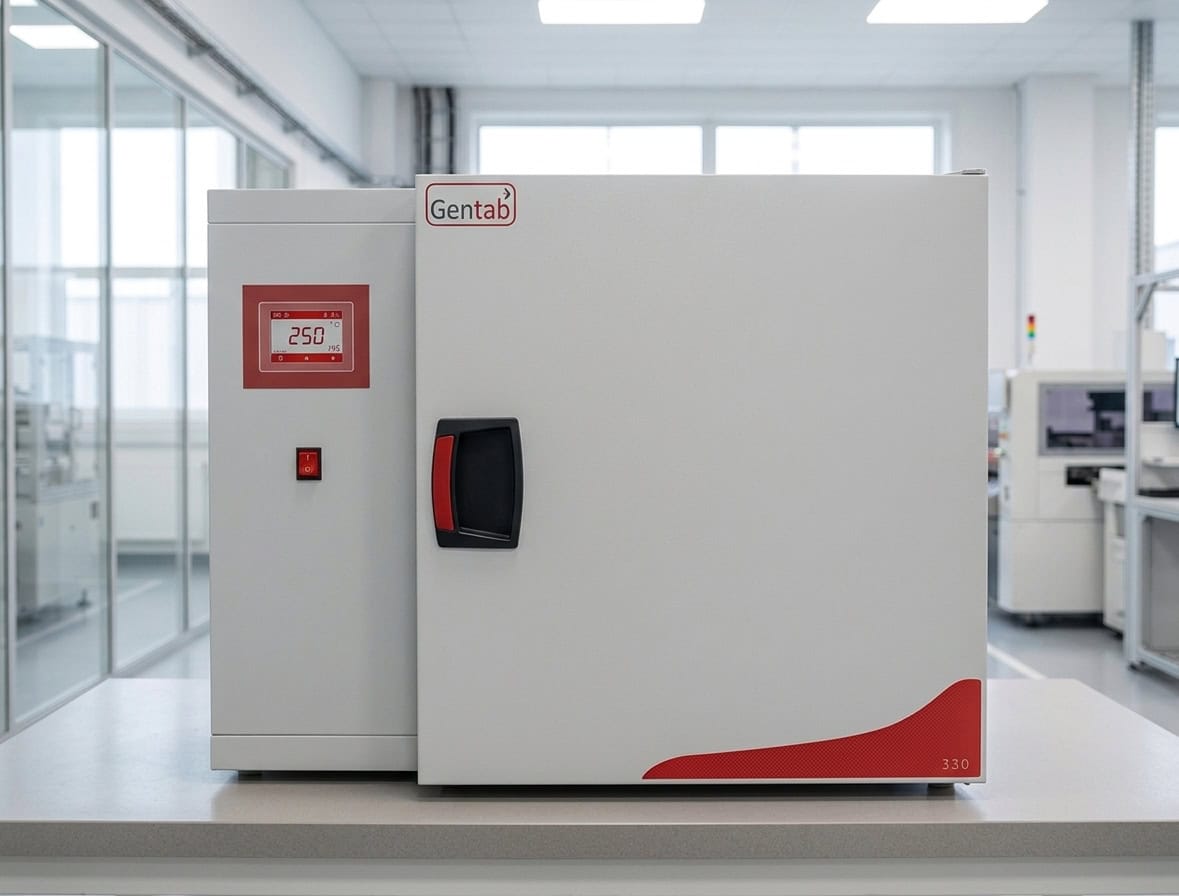
A laboratory drying oven provides a controlled heated environment for removing moisture, preparing samples, curing materials and supporting routine laboratory processes.
The material being dried, the load size, airflow pattern and level of temperature control all affect the results, so the right oven for you shouldn’t be based on the temperature range alone. An oven that reaches the required setpoint could still be the wrong choice if samples are tightly packed, the chamber is too small or the application needs more repeatable monitoring.
What is a laboratory drying oven?
A laboratory drying oven is a heated chamber used for controlled drying, warming, conditioning and curing. It provides a more repeatable environment than open-air drying or uncontrolled heating, allowing users to set a temperature and expose materials for a defined period.
Laboratory drying ovens are commonly used to remove moisture from samples, components or materials. It’s worth noting that these chambers don’t offer humidity control or low-temperature conditioning, which are functions of a climatic or environmental test chamber.
They can support work across varying sectors like research, quality assurance, manufacturing and materials testing environments. The intended load still needs to guide the selection because drying a small number of lightweight samples creates different demands from processing larger parts, multiple trays or dense materials that retain heat.
Common uses for laboratory drying ovens
Laboratory drying ovens are used wherever materials need controlled, repeatable heating. While specific applications vary depending on the substrate and required temperature, their primary function is moisture extraction or gently conditioning samples.
Common applications include:
- Moisture removal: Evaporating liquid from raw samples, components, or processed materials.
- Sample preparation: Removing moisture prior to analytical weighing, testing, or processing.
- Equipment drying: Rapidly drying washed laboratory glassware, tooling, or metal components.
- Material conditioning: Pre-heating or stabilizing materials ahead of inspection or testing.
- Accelerated ageing: Testing product stability and long-term durability under sustained thermal conditions.
- General laboratory heating: Maintaining stable temperatures for quality assurance routines.
While drying ovens are versatile, matching the unit to your exact process is important, especially when heat is used to alter a material rather than simply dry it.
Matching the oven to the heating task
Although drying, curing, and ashing all rely on thermal energy, each process achieves a completely different physical or chemical outcome. To choose the right oven, you should match the technology to the primary heating objective:
- Drying (Moisture Removal): Focuses on evaporating water or solvents from a material without altering its fundamental physical structure. Standard laboratory drying ovens excel at this task by using controlled airflow and moderate temperature ranges.
- Curing (Material Hardening): Uses heat to trigger a chemical reaction or structural shift that hardens coatings, adhesives, or resins. Curing often demands precise soak times, specific ramp rates, and tailored airflow to ensure the material develops its target mechanical properties.
- Ashing (Organic Burn-Off): Heats samples to extreme temperatures to completely burn off organic matter, leaving only inorganic residue for analytical assessment. Because this process requires significantly higher temperatures than routine drying, it necessitates high-temperature muffle furnaces rather than standard drying ovens.
These distinctions should play a role in the oven that’s chosen so you don’t select an oven based solely on peak temperature. Airflow configuration, atmosphere control, and thermal ramping must all align with your material’s end goal.
If you are unsure which specification fits your process, the ETS team can recommend the right setup for your needs..
How drying ovens work in practice
A drying oven heats the air within its chamber to the selected temperature. Heat then transfers to the load, encouraging moisture to evaporate or helping the material reach the required condition.
Reaching the selected chamber temperature is only the first stage, however. The load needs time to absorb that heat, and this can vary considerably between materials. For example, a small, lightweight sample may warm quickly, while a larger, denser or wetter item can take much longer to reach a stable temperature throughout.
Moisture removal can vary too. Surface area, thickness and material composition all influence how readily moisture escapes. As a result, the controller may show that the oven has reached setpoint while parts of the load are still warming or drying at a different rate.
For work that needs closer control, this stabilisation period should be taken into account within the drying cycle. Suitable dwell times, consistent sample arrangements and representative checks can help show that the required result has been achieved.
Temperature range and control considerations
Laboratory drying ovens typically operate from ambient temperature to around +250°C. The available range varies by model, so it’s worth confirming the exact specification with us before ordering.
The required temperature needs to suit the load without damaging the product. Some materials can be affected by excessive heat, while others may need a higher temperature or longer exposure to remove moisture effectively. With this in mind, before selecting an oven, you should establish:
- the starting condition of the material
- the maximum temperature it can tolerate
- the target drying, conditioning or curing temperature
- the required exposure time
- whether the process requires a defined heat-up profile
- how consistent the temperature needs to be across the load
A higher maximum temperature doesn’t always make an oven more useful. If the process runs at moderate temperatures, it may be more valuable to focus on usable chamber volume, airflow, control functions and monitoring than on capacity the process won’t use.
Where a process needs temperature and humidity control, cooling or climatic simulation, an environmental test chamber may be more relevant than a laboratory oven.
Natural versus forced convection
Airflow has a direct effect on how heat reaches the load and how moisture moves away from it and drying ovens generally use either natural convection or forced convection.
Natural convection ovens
Natural convection relies on the natural movement of heated air within the chamber. As air warms, it rises and circulates around the load without a fan driving the process.
This can be useful for lightweight materials, powders or products that could be disturbed by stronger airflow. The trade-off is that the drying process may take longer, particularly where the load is dense, heavily packed or arranged across several shelves.
Forced convection ovens
Forced convection uses a fan to circulate heated air around the workspace which improves heat distribution and helps maintain more consistent conditions across the chamber, particularly with larger loads or batch processes.
However, stronger airflow isn’t always the right answer. Delicate samples, loose materials or products with surfaces that need controlled treatment may need a gentler approach so the best option depends on the material, loading arrangement and objective.
Size, loading and airflow
Chamber size isn’t only about whether the product physically fits. The load also needs enough clearance for heated air to move around it.
Overloading shelves, stacking items tightly or placing large products against chamber walls can restrict airflow which can lead to uneven heating and differences between samples positioned in different parts of the oven.
For more reliable drying results:
- leave practical gaps between samples, trays and shelves
- avoid blocking air circulation paths
- distribute the load evenly where possible
- use shelves or fixtures that support the product without creating unnecessary obstruction
- avoid placing items directly against chamber walls
- allow enough time for the full load to reach process temperature
Because size, loading and airflow makes such a difference, the same oven can perform differently with a small load versus a full batch. A densely loaded chamber has more thermal mass and can affect heat-up time, recovery and temperature distribution. This needs to be taken into account rather than assuming one programme works for every load.
For larger components or higher-volume batch work, large capacity laboratory ovens may provide a more practical working volume. Where bench space is limited, multi-purpose benchtop laboratory ovens can be a better fit for smaller loads.
Best practice for reliable drying
Good results depend on a consistent process, not just the oven setting. The following checks can help reduce variation between runs.
Use a defined process
Set out the selected temperature, loading arrangement, dwell time and acceptance criteria. This gives operators a consistent starting point and makes it easier to investigate any unexpected result.
Let the load stabilise
Don’t assume the product has reached the required temperature as soon as the chamber display reaches setpoint. Larger or denser items need time for heat to transfer through the material.
Keep loading consistent
Changes in the number of samples, shelf positions or tray arrangement can affect airflow and drying time. Repeatable loading supports more repeatable outcomes.
Match the oven to the material
A standard drying oven may not be suitable for heat-sensitive materials, applications requiring reduced pressure or work where humidity needs to be controlled. Start by identifying the material and the conditions it needs, then choose an oven designed to provide the right environment.
Record the information that matters
For routine or quality-controlled processes, record the programme, start and finish times, load details and any relevant observations. Control and data logging systems may be useful where improved recording, traceability or programmed control is needed.
When to consider calibration and servicing
Calibration is relevant where confidence in temperature performance, traceability or audit readiness matters. It can also be useful when there are inconsistent results or when an oven is introduced into a new quality-controlled application.
The right calibration scope depends on the oven, the process temperatures, the number of points needed and the requirements of the relevant quality system. A calibration certificate alone doesn’t prove that the full drying process is suitable, but it can provide evidence about the chamber’s performance at the defined points.
Regular servicing also helps identify wear, control issues and other factors that could affect reliable operation over time. Ask us about our calibration services alongside ongoing maintenance and monitoring needs.
Choosing a laboratory drying oven with ETS
The right laboratory drying oven depends on the material being handled, the conditions required and how consistent and repeatable the results need to be. Factors such as temperature range, load size, airflow, sample dimensions, cycle duration and available space can all influence the most suitable oven configuration. Controller, data logging and calibration requirements, along with site, power and ventilation considerations, may also need to be taken into account.
We supply general purpose laboratory ovens for controlled heating, drying and testing applications, and can help you identify an option suited to your particular requirements.
If you’re unsure which oven size, temperature range or configuration is right for your application, contact ETS to discuss your requirements. We can help you select a drying oven based on how it will be used, rather than simply choosing by maximum temperature or chamber volume.
Frequently Asked Questions
- What is a laboratory drying oven used for?
A laboratory drying oven is used for controlled heating and moisture removal. Typical applications include drying samples, preparing materials for testing, conditioning components and curing selected coatings or adhesives.
- What temperature range do drying ovens cover?
Laboratory drying ovens typically operate from ambient temperature to around +250°C but the available range differs between models.
- What’s the difference between drying, curing and ashing?
Drying removes moisture through controlled heating. Curing uses heat to develop or harden materials such as coatings, adhesives or resins. Ashing removes organic content at much higher temperatures and normally needs a different type of equipment.
- How should samples be loaded in a drying oven?
Arrange samples so heated air can circulate around them. Avoid tightly packing shelves, blocking airflow routes or placing items against the chamber walls. Consistent loading helps achieve more repeatable results.
- What is the difference between natural and forced convection?
Natural convection relies on the movement of heated air without fan assistance. Forced convection uses a fan to circulate air through the chamber. The best choice depends on the material, loading arrangement and need for airflow across the product.