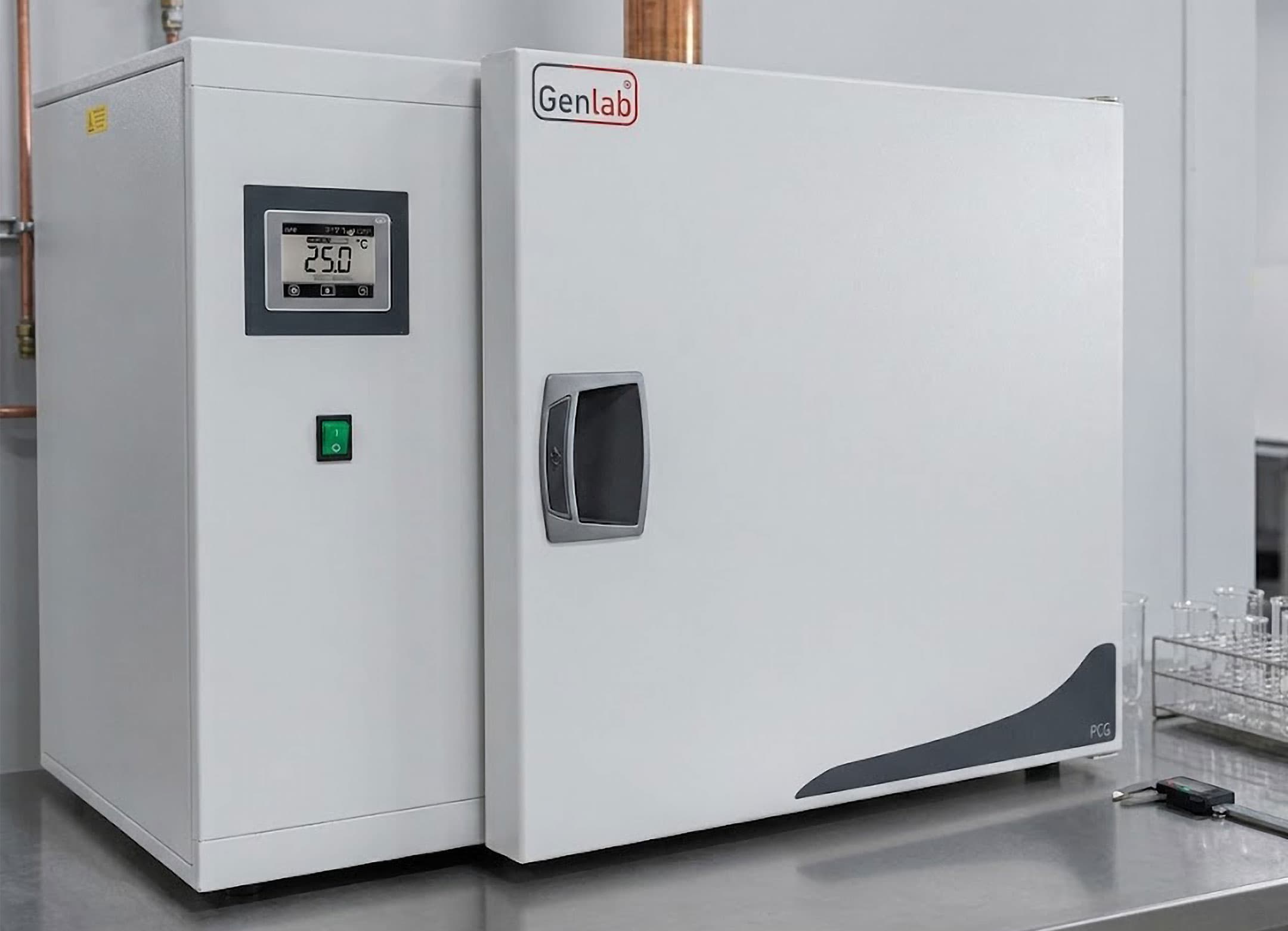
Battery performance is closely linked to the conditions it experiences. Temperature changes can affect charging behaviour, available capacity and the way heat develops within a cell, module or pack, so testing needs to reflect the environment the battery is expected to face in storage, operation or transport.
A battery test chamber provides the controlled conditions needed to assess these effects against a defined profile. However, selecting the chamber is only part of the decision, as the battery format, electrical activity, monitoring arrangements and potential consequences of a fault must also shape the wider test setup.
Why battery testing uses environmental chambers
Environmental chambers give development and test teams a controlled way to assess how batteries respond to conditions they may encounter in service. By holding the test item at a defined temperature, or combining temperature with humidity where the method requires it, teams can compare results without changes in the surrounding environment influencing the outcome.
This can support battery storage tests, temperature-controlled charge and discharge work, cycling programmes and wider reliability assessments. It also helps distinguish whether a change in performance is linked to the battery design, its state of charge or the applied environmental conditions.
The chamber arrangement needs to reflect the scale of the test. A single cell creates different loading, monitoring and safety considerations from a battery module or EV pack, where product size, heat output and electrical connections can become more demanding. Battery test chambers provide a starting point for controlled battery evaluation, but the final configuration needs to be based on the individual test profile and risk assessment.
Temperature and humidity conditions for battery testing
Temperature profiles are used because battery behaviour can vary across its operating range. Low temperatures may affect available capacity and charging response, while higher temperatures can increase thermal stress and alter the way heat is generated or dissipated during operation.
The exact range depends on the battery chemistry, test purpose, state of charge and applicable method. There isn’t one standard temperature profile that applies to every battery test. Some programmes focus on storage at a fixed condition, while others assess repeated temperature changes or battery performance during charging and discharging.
The chamber air temperature provides part of the picture, but it doesn’t always reflect the temperature within the battery itself. Larger modules and packs can take longer to stabilise than individual cells, especially where the assembly has significant thermal mass or generates heat while in use. Product-mounted sensors may therefore be needed alongside chamber measurements so the test team can understand how the battery responds throughout the programme.
Humidity isn’t needed for every test, but it may form part of the work where the product’s intended environment or test method includes damp heat, condensation or combined temperature and humidity exposure. In those cases, the required relative humidity must be checked against the chamber’s working range at the relevant temperature.
Safety features to consider
Battery testing can involve significant safety risks. Chamber selection should be based on the specific cell, module or pack, the test method, the risk assessment and any applicable standards.
The level of risk can change with battery chemistry, energy content, state of charge and whether the item is being stored, charged, discharged or subjected to abuse testing. This means a low-energy cell storage test and a powered EV battery module test won’t necessarily need the same chamber arrangement or site controls.
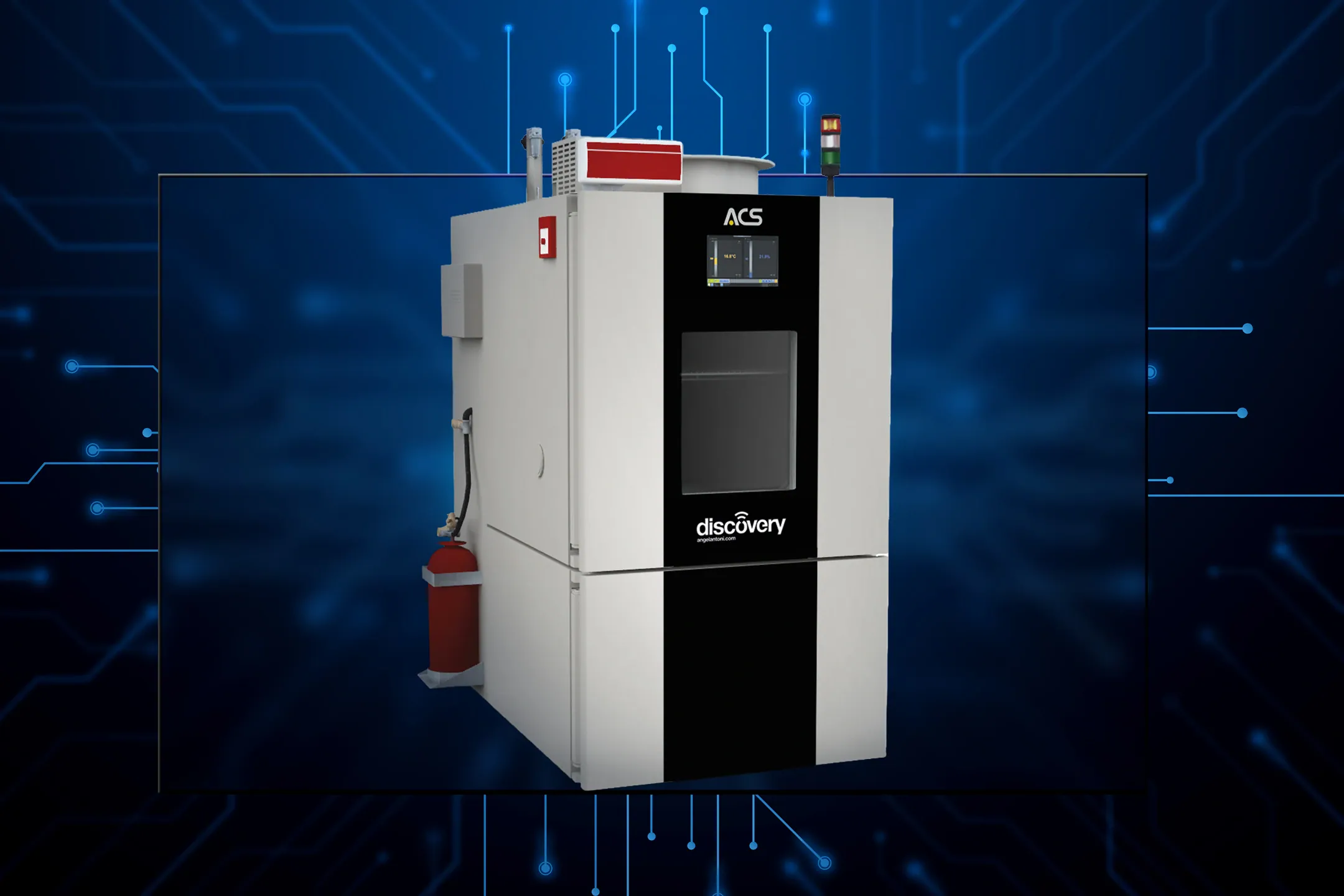
Depending on the identified hazard, a battery safety chamber may need features or supporting arrangements such as:
- temperature monitoring of the test item
- gas detection or monitoring
- containment, pressure-relief and controlled venting provisions
- ventilation, extraction or purge arrangements
- alarms, interlocks and electrical isolation
- suitable suppression measures and emergency response procedures
These measures need to operate as part of the wider test and site safety strategy. UK guidance for battery systems highlights the need to assess and manage fire, explosion and electrical risks, while the practical arrangement will depend on the battery and test activity involved.
Monitoring, alarms and data logging
Battery testing often involves more than recording chamber conditions. Alongside temperature and humidity, the test plan may require battery voltage, current and surface temperature to be monitored so the team can see how the item responds throughout the profile.
This information supports engineering review after the test, but it can also help identify abnormal behaviour while the programme is running. Alarm limits and the response expected from the test team need to be agreed through the risk assessment, rather than applied as a standard arrangement for every test.
The monitoring setup will vary with the work being carried out. A storage test may only need chamber records and a limited number of product sensors, whereas a charge and discharge programme can require more extensive cable routing, measurement inputs and coordinated data capture. Control and data logging systems can support programmed profiles, retained records and clearer visibility of chamber and product conditions where needed.
Standards and test requirements
The required test method should guide the chamber selection, rather than adapting the test around whichever equipment is available.
For transport, UN 38.3 testing relates to the UN Manual of Tests and Criteria for lithium cells and batteries. The current UN manual includes provisions for lithium batteries in subsection 38.3, which is relevant to the transport classification of battery types. It isn’t a general substitute for product validation, EV durability testing or a site-specific battery safety assessment.
EV battery testing can involve different standards depending on whether the work concerns cells, modules, packs or vehicle-level systems. IEC 62660-1, for example, sets out performance and life test procedures for secondary lithium-ion cells used in electric road-vehicle propulsion applications.
The applicable standard may define temperature conditions, dwell periods, state of charge, charging or discharging activity, sample mounting, monitoring and pass-fail criteria. It may also specify whether the product needs temperature-only exposure, humidity control, thermal cycling, vibration or another combined test environment.
Before planning the chamber setup, confirm:
- the battery type, chemistry and physical format
- whether the item is a cell, module, pack or EV component
- the test state, such as storage, cycling, charging, discharge or abuse testing
- required temperature and humidity conditions
- product heat output and electrical connection needs
- monitoring, alarms and data-recording requirements
- the relevant standard, customer specification or internal test plan
- the risk assessment and site emergency arrangements
Standards and battery safety guidance change over time. Confirm the latest applicable version and the full test requirements before finalising a test method.
Thermal runaway considerations
Thermal runaway is a failure condition in which a battery generates heat faster than it can dissipate, potentially leading to venting, fire or the release of gases. The risk needs to be assessed in relation to the battery chemistry, energy content, state of charge and test activity, rather than treated as identical for every battery application.
Early temperature and gas monitoring can help identify signs of abnormal behaviour, but detection alone isn’t a complete control measure. The test arrangement also needs suitable containment, venting, isolation and emergency procedures that reflect the foreseeable consequences of a failure. Government guidance notes that gas detection can provide early warning of thermal runaway and associated off-gases.
EV sector trends
As EV battery development moves from individual cells towards larger systems, testing arrangements often become more application-specific. The chamber may need to accommodate larger loads, more electrical connections and more detailed monitoring while supporting a defined environmental profile.
This doesn’t mean that every EV programme needs a large or highly specialised chamber, though. The right configuration depends on the stage of development, the battery format and whether the objective is performance assessment, durability testing, validation or safety-related evaluation.
How to choose a battery test chamber
Once the test objective is clear, the next step is to assess how the battery will operate within the chamber. The available workspace needs to accommodate the item with room for airflow, fixtures, sensors and electrical connections, while the chamber and site arrangement need to support the required safety measures.
ETS will need to understand the battery type, test conditions, product dimensions, heat output and monitoring requirements before recommending a route. It is also helpful to share the relevant test method, expected state of charge and any existing risk assessment so the chamber configuration can be discussed in context.
The ETS chamber search tool can help begin the selection discussion. ETS can then review whether a standard battery test chamber or a more tailored arrangement is needed for the intended work.
Discuss battery test chamber requirements with ETS
Battery chamber selection needs to balance controlled environmental conditions with the practical and safety demands of the test. Contact ETS to discuss your battery format, temperature profile, monitoring needs and safety requirements.
Frequently Asked Questions
- What is a battery test chamber?
A battery test chamber is an environmental chamber used to expose batteries to controlled temperature and, where required, humidity conditions. It can support storage, cycling, charge and discharge, reliability or safety-related testing.
- What is the difference between a battery test chamber and a standard temperature chamber?
A battery testing chamber is selected around the battery’s environmental profile, electrical connections, monitoring needs and potential hazards. Not every standard temperature chamber will be suitable for battery work.
- Is humidity needed for battery environmental testing?
Not always. Humidity is only needed where the test method, intended environment or product requirement calls for it. Temperature-only testing may be sufficient for many storage and performance programmes.
- What is UN 38.3 testing?
UN 38.3 refers to tests in the UN Manual of Tests and Criteria that are relevant to the transport of lithium cells and batteries. It isn’t a complete battery validation programme.
- Can ETS help specify safety features for battery testing?
ETS can review the test profile, battery format and chamber requirements. The final safety arrangement must be based on the risk assessment, site procedures and applicable standards.