Environmental test chambers are built to last. It’s not unusual to see units still operating reliably after 15 or 20 years – sometimes longer. But that longevity is rarely accidental. It’s usually the result of consistent maintenance, sensible operation and timely upgrades.
If your chamber plays a critical role in validation or production testing, extending its service life should be deliberate rather than reactive.
Prevent Problems Before They Become Failures
One of the biggest factors in extending chamber life is preventative maintenance.
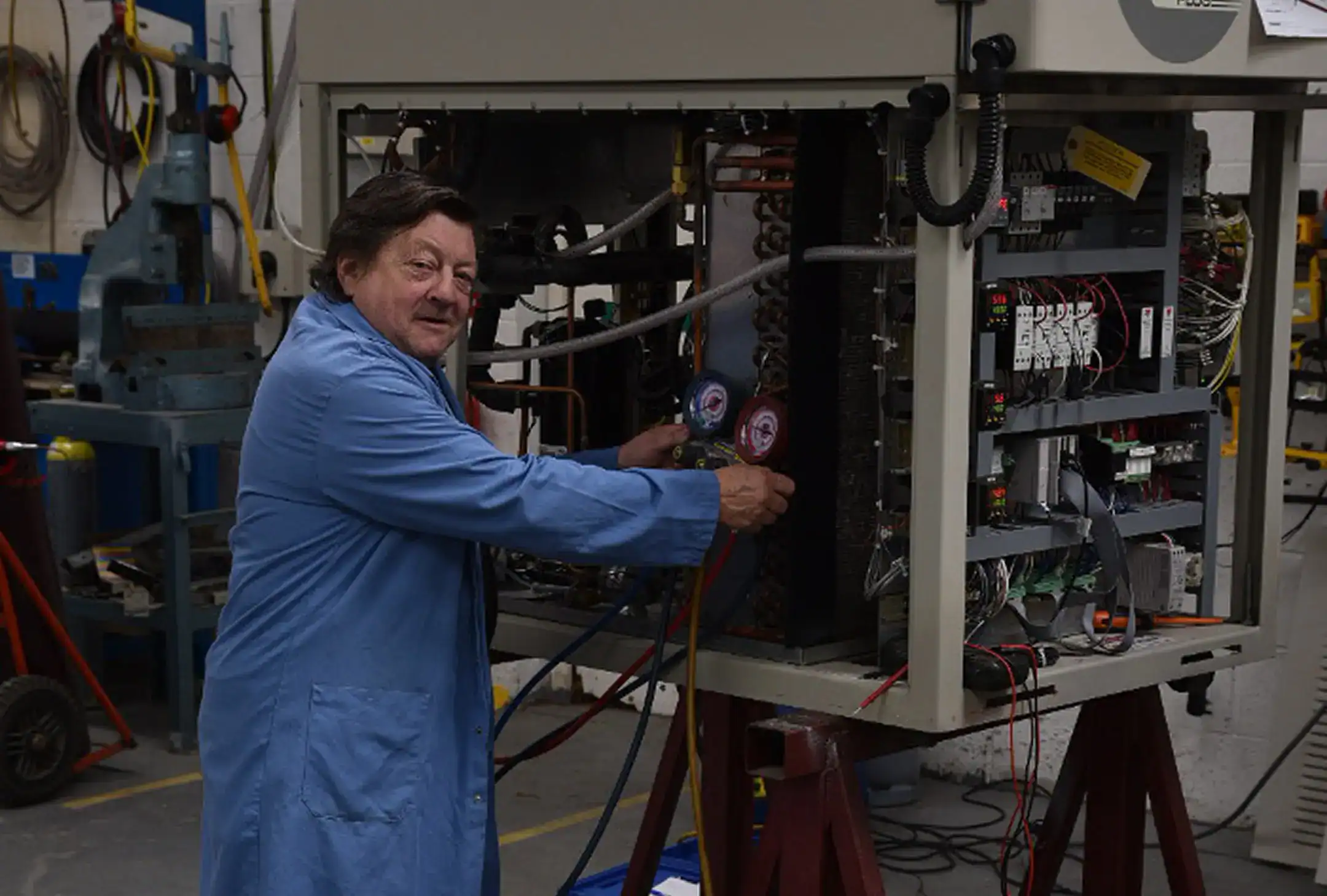
Waiting until something fails often leads to larger, more expensive repairs. In contrast, routine inspections allow worn components to be identified early – before they cause wider issues. Regular checks of compressors, electrics, sensors, seals and airflow systems reduce the likelihood of unexpected downtime and help maintain stable performance.
Planned maintenance also gives you predictability. Instead of emergency call-outs, you have scheduled intervention and controlled costs.
Look After the Refrigeration System
In most environmental chambers, the refrigeration system works hardest. It is also typically the most expensive area to repair.
Something as simple as a blocked condenser can raise operating temperatures and increase compressor stress. Over time, that additional strain shortens component life. Ensuring adequate airflow around the chamber, keeping condensers clean and responding quickly to unusual noises or extended pull-down times can significantly extend refrigeration life.
Many premature compressor failures are not caused by age – they are caused by neglect.
Calibration Protects More Than Accuracy
Calibration is often viewed purely as a compliance requirement, but it also protects the mechanical health of the chamber.
When sensors drift, control systems work harder to compensate. That constant correction places unnecessary strain on heating and cooling components. Keeping calibration up to date ensures the system is operating smoothly rather than constantly over-adjusting.
Accurate feedback means stable control – and stable control means less mechanical stress.
Modern Controls Can Extend Usable Life
In many ageing chambers, the enclosure and refrigeration system are still serviceable, but the controls are outdated.
Upgrading to a modern PLC-based controller can transform performance and usability. Improved stability, better data logging and clearer alarm management often resolve issues that operators had assumed were mechanical.
In practical terms, a control upgrade can add years to a chamber’s life at a fraction of the cost of replacement.
Small Details Matter
Door seals are a good example. They are inexpensive compared to major components, yet worn gaskets can cause temperature instability and longer recovery times. That, in turn, increases compressor workload and energy consumption.
Regularly checking seals, hinges and chamber integrity prevents minor deterioration from turning into avoidable strain on the system.
Likewise, ensuring test loads are positioned correctly and airflow is not obstructed has a direct impact on performance and longevity.
Avoid Operating Beyond Design Limits
Environmental chambers are designed for specific ramp rates, load masses and operating ranges. Repeatedly exceeding those limits – for example by demanding aggressive ramp rates or overloading the workspace – will accelerate wear.
Good operating discipline makes a measurable difference. Allowing appropriate airflow around specimens, avoiding unnecessary rapid cycling and using realistic test profiles all help preserve component life.
It is easy to overlook how daily operating habits influence long-term reliability.
Don’t Ignore Early Warning Signs
Chambers rarely fail without warning.
Extended pull-down times, minor instability, unfamiliar noises or intermittent alarms are often early indicators of underlying issues. Investigating these signs early usually results in minor corrective work rather than major repair.
Encouraging operators to report small changes in behaviour can prevent significant downtime later.
Plan for Mid-Life Refurbishment
Even with excellent maintenance, certain components will reach the end of their service life. Compressors, sensors and electrical assemblies are consumable over the long term.
Rather than waiting for complete failure, many organisations now adopt a staged refurbishment approach. Replacing key components at planned intervals spreads cost and prevents sudden disruption.
With the right strategy, it is entirely realistic for a well-maintained chamber to remain productive for decades.
A Long-Term Asset, Not a Short-Term Tool
Environmental test chambers are significant investments. Treating them as long-term assets – rather than simply equipment to repair when necessary – changes the outcome considerably.
Preventative maintenance, accurate calibration, sensible operation and periodic upgrades all contribute to extending service life. Individually, each action may seem small. Collectively, they determine whether a chamber provides 10 years of service or 25.
If you are unsure whether your current maintenance approach is protecting your equipment as effectively as it could, a structured engineering review can provide clarity and help you plan ahead.
Want to Extend the Life of Your Equipment?
Speak with our engineering team about a structured service and maintenance plan tailored to your chamber type and usage profile. Proactive support today can prevent costly disruption tomorrow.